

Chronicles of the Kingdom is a competitive-yet-cooperative timeline building game for all ages (recommended 9+ if they want to read the cards themselves), great for families, youth groups, homeschools, small groups and more (I've been asked to run a family church service with it!). The goal? Work together (sort of!) to build the Bible's epic story in chronological order while testing your knowledge of when key events happened. The twist: you place cards before finding out where they fit, leading to surprises, laughs, and "aha!" moments presenting perfect learning opportunities.
Before we cover how to play, we first need to understand Periods and Event numbers. Every card depicts an Event and each Event occurs within a given Period. There are 7 Periods in Chronicles of the Kingdom and they are colour coded to make the game easy to play at a glance:
Each card in the deck has the Period it belongs to printed along the top so it can't be missed!
In addition, each card also has an Event number. At some point in the game two Events will occur in the same period and this number tells you which order within the period they occur. These are also colour coded to match the period to help you quickly identify where the Event sits in the timeline.
In the example above, the Event 'Moses Parts the Sea' is in Period 2 - The Exodus. The colour coordinated Event number '2' indicates that it sits after 'The Plagues and Passover' which is Event '1' in the same Period. 'The Fall of Jericho' is part of Period '3 - The Judges', so even though it has an Event number of '1' it sits in the Period after 'Moses Parts the Sea'. This is where the colours help for quick identification of correct placement.
Now that we understand how the cards work we can look at how the game is played:
How to Play Chronicles of the Kingdom
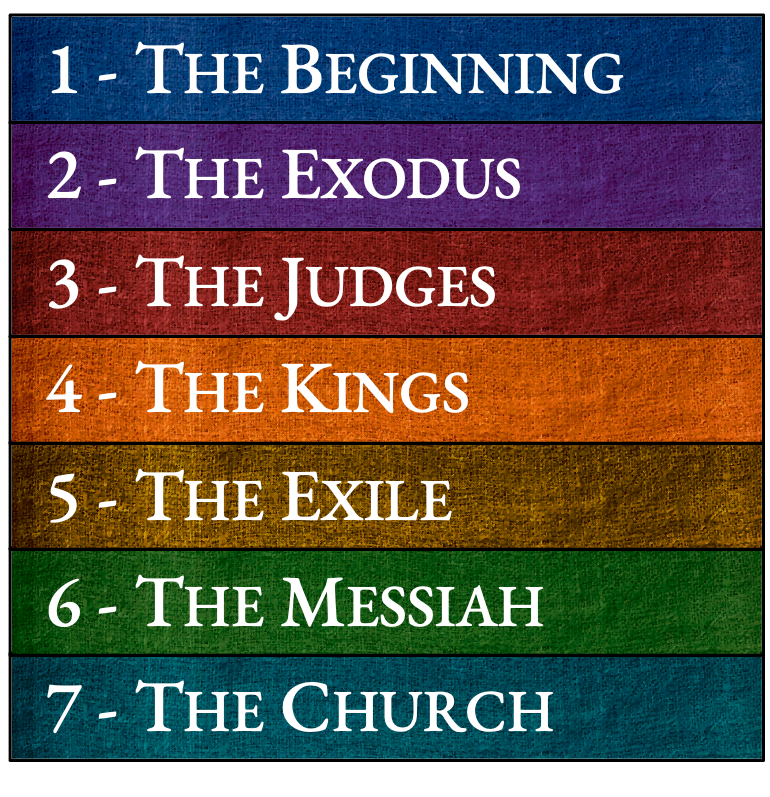
(A number of the periods share a name with books in the Bible, but the events in them typically span further than the contents of those books)
Basic Play (Expanded rules from the box)

Setup
-
Shuffle the deck (remembering to remove the rules cards!)
-
Randomly select a card and place it picture-side up in the middle of the table. This is where the Timeline will be built
-
Deal 5 cards to each player picture side down in front of them on the table, red side up - no peeking at the picture side!
Play
-
The youngest player starts: Select a card you wish to play this turn. Without showing the picture side of the card, read aloud the title and summary on the red side so that all players can hear.
-
Decide where this event fits in the timeline (before, after, or between existing cards) and place it red-side up in that spot.
-
Everyone chants together: “Flip, flip, flip!” (usually while pounding the table!) Turn the card over to reveal the picture side.
-
First check the Period: Look at the coloured Period banner at the top of the card to make sure it is in the right order with the cards either side.
-
Then check the Event number to see if the card is in the correct place within its colour Period.
-
If it is in the correct place you score 1 point! If it is wrong you do not score a point, but move the card to the right position (learning moment!).
-
The next player takes their turn in the same way.
-
Play continues until everyone’s hand is empty.
-
The player with the most points wins!
-
In the case of a tie, deal another round of cards (or gracefully share the victory and bask in a job well done!)
Too short? Deal more cards to each player for a longer game
Too long? Deal less cards for a shorter game, or split into teams and use Team Play (see below)
Want a harder game? Start the game with more cards in the timeline.
Want an easier game? Try playing in teams using Team Play (see below)
This is just the basic game included in the box, there are plenty more ways to play and use the cards. Keep scrolling to find out!
Team Play (Ideal for 6 or more players)
This variation of the rules gives players the chance to discuss where they think events happened and pool their collective knowledge. Great if you have players with less Bible experience!

Setup
-
Split into teams (I tend to find 3 or 4 teams works best)
-
Shuffle the deck
-
Randomly select a card and place it picture-side up in the middle of the table. This is where the Timeline will be built
-
Deal 4 cards to each team picture side down in front of them on the table, red side up - no peeking at the picture side!
Play
-
The team with the youngest player starts
-
As a team decide which card you wish to play this turn
-
Without showing the picture side of the card, one team member reads aloud the title and summary on the red side so that all players can hear. (I suggest encouraging different members of the team to do this throughout the game)
-
Decide where this event fits in the timeline (before, after, or between existing cards) and place it red-side up in that spot.
-
Everyone chants together: “Flip, flip, flip!” (usually while pounding the table!) Turn the card over to reveal the picture side.
-
First check the Period: Look at the coloured Period banner at the top of the card to make sure it is in the right order with the periods of the cards either side.
-
Then check the Event number to see if the card is in the correct place within its colour Period.
-
If it is in the correct place the team scores 1 point! If it is wrong they do not score a point, but move the card to the right position (learning moment!).
-
The next team takes their turn in the same way.
-
Play continues until the last card is played
-
The team with the most points wins!
-
In the case of a tie, deal another round of cards (or gracefully share the victory and bask in a job well done!)
Solo Play: Endurance
This variation is designed for a single player to test their own biblical knowledge and beat their own best score. Great for people learning the Bible in their own time!

Setup
-
Remove one card from each of the 7 Periods and place them picture-side up on the table in timeline order, to act as your anchor points: (I use these, but feel free to choose different cards)
-
Period 1 - Noah and the Flood
-
Period 2 - Moses Parts the Sea
-
Period 3 - The Fall of Jericho
-
Period 4 - God's Promise to King David
-
Period 5 - Cyrus Decrees the Jews can Return
-
Period 6 - The Crucifixion and Resurrection
-
Period 7 - The New Jerusalem
-
-
Shuffle the remaining deck and place it picture-side down in front of you.
Play
-
Take the top card of the deck. Without looking at the picture side, read the title and summary on the red side.
-
Decide where this event fits in the timeline (before, after, or between existing cards) and place it red-side up in that spot.
-
Once you have committed to a spot, turn the card over to reveal the picture side.
-
First check the Period: look at the coloured Period banner at the top of the card to make sure it is in the right order with the Periods either side.
-
Then check the Event number to see if the card is in the correct place within its colour Period.
-
If it is correct, leave it in place and take another card from the deck - your run continues!
-
If it is wrong, stop the round. Move the card to its correct position (learning moment!), then count up how many cards you successfully placed before the mistake. This is your score for the run.
-
Play again and see if you can beat your score!
Too Hard? Start with less cards on the timeline or try Discovery mode (see below)
Too Easy? Try Time Trial mode (see below)
Scoring
The aim of the game is to get the best score in a single run - the number of cards you place correctly, one after the other, before your first mistake. Keep a note of your best run as your Endurance PB (Personal Best), and try to beat it every time you play!
Solo Play: Time Trial (Advanced Play!)
This version turns the game into a race against the clock. Try and place as many cards correctly before the time runs out!
The beauty of time trial is anyone can play, even those who have managed to memorise the whole deck! (Like me for example...😅)
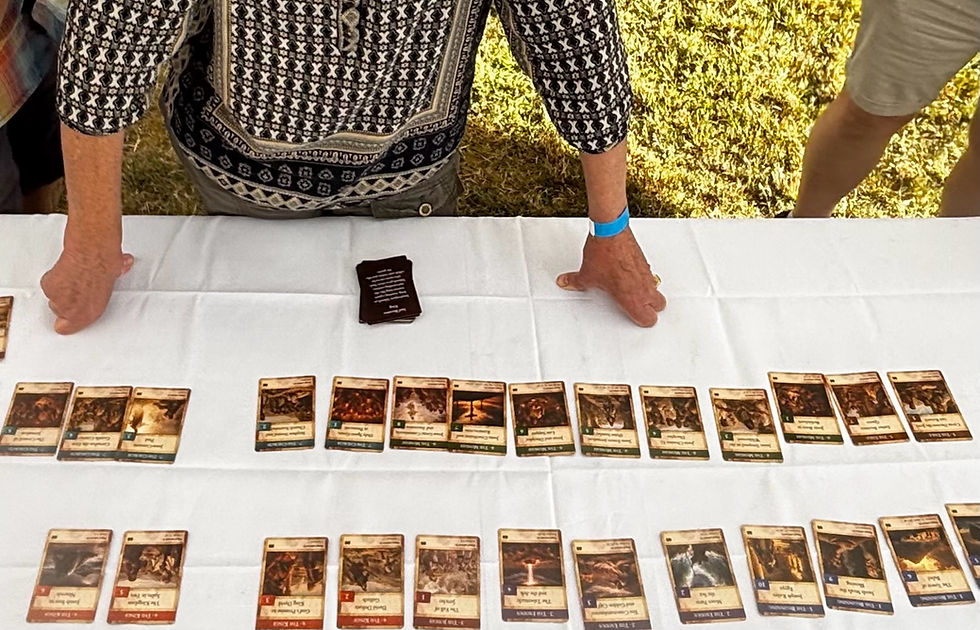
Setup
-
Decide the duration you wish to play and set a timer (e.g. 3 minutes).
-
Randomly select a card and place it picture-side up in the middle of the table. This is your starting card for the Timeline.
-
Shuffle the remaining deck and place it picture-side down in front of you.
Play
-
Start the timer.
-
Take the top card of the deck and place it in the Timeline where you think it fits (before, after, or between existing cards), then flip it to reveal the picture side.
-
Check the Period and Event number as usual:
-
If it is in the correct place, leave it in the Timeline.
-
If it is incorrect, set it aside in a discard pile and move straight on - there's no time to fix it!
-
-
Keep taking the top cards from the deck and placing or discarding them as fast as you can until the timer runs out. The discard pile stays put - don't reshuffle it back in.
-
When time is up, count the cards successfully placed in the Timeline (not including the starting card). This is your score for the run.
Too Hard? Set the timer for a longer duration or try playing Endurance mode instead
Too Easy? Set the timer for a shorter duration to really make you sweat!
Scoring
The aim of the game is to correctly place as many cards as possible before the timer runs out. Keep a note of your best score as your Time Trial PB (Personal Best), and try to beat it every time you play!
Solo Play: Discovery
Ideal for those who are new to the Bible, less confident with the overall storyline, or simply want a learning experience at a leisurely pace, Discovery strips away the time pressure of Time Trial while keeping every card a chance to learn - correct or not, every placement moves the story forward.
Setup
-
Randomly select a card and place it picture-side up in the middle of the table. This is where the Timeline will be built.
-
Shuffle the remaining deck and place it picture-side down in front of you.
Play
-
Take the top card of the deck and place it in the Timeline where you think it fits (before, after, or between existing cards), then flip it to reveal the picture side.
-
Check the Period and Event number as usual:
-
If it is in the correct place, leave it in the Timeline and score 1 point.
-
If it is incorrect, simply move it to its correct position in the Timeline - a learning moment! - and carry on.
-
-
Keep taking cards from the deck and placing them, correcting as you go, until the deck is empty.
-
By the end, the full Timeline will be built in the correct order, whether or not every card was right first time.
Scoring
Your score is the number of cards you placed correctly. Keep a note of your best score as your Discovery PB, and see if you can beat it next time!
Free Play
Prefer no pressure at all? Play Discovery without keeping score - just work through the deck, correcting as you go, and enjoy watching the story of the Bible take shape.
Competition Play
Fancy a bit more of a challenge? Both Endurance and Time Trial can be turned into a head-to-head competition between two or more players. Rather than chasing your own Personal Best, you're chasing each other's scores.
Endurance Competition
-
Set up the Timeline as in Solo Play: Endurance.
-
Players take turns playing a full Endurance run each, one after another, following the normal Endurance rules.
-
Record each player's score once their run ends (i.e. once they make their first mistake).
-
The player with the highest score wins!
Time Trial Competition
-
Agree a fixed time limit that all players will play to (e.g. 3 minutes each).
-
Set up the Timeline as in Solo Play: Time Trial.
-
Players take turns playing a full Time Trial run each, to the same time limit, following the normal Time Trial rules.
-
Record each player's score at the end of their run.
-
The player with the highest score wins!
Handicaps
If players are of very different ages or experience levels, you can even the odds with a handicap - giving a weaker player more time on the clock than a stronger one. For example, an experienced adult might play to 1 minute while a young child plays to 10 minutes, with both aiming to beat the other's score. Agree the handicap before you start, and have fun finding a balance that keeps it competitive for everyone!